Residential Furnace Repair Process in Akron, OH
A step-by-step look at how residential furnace repair works, from the first questions about your symptom through diagnosis, parts and follow-up.
Call now FOR FREE QUOTE and for service availability.
Please have your 5-digit ZIP code ready.
Quick answer
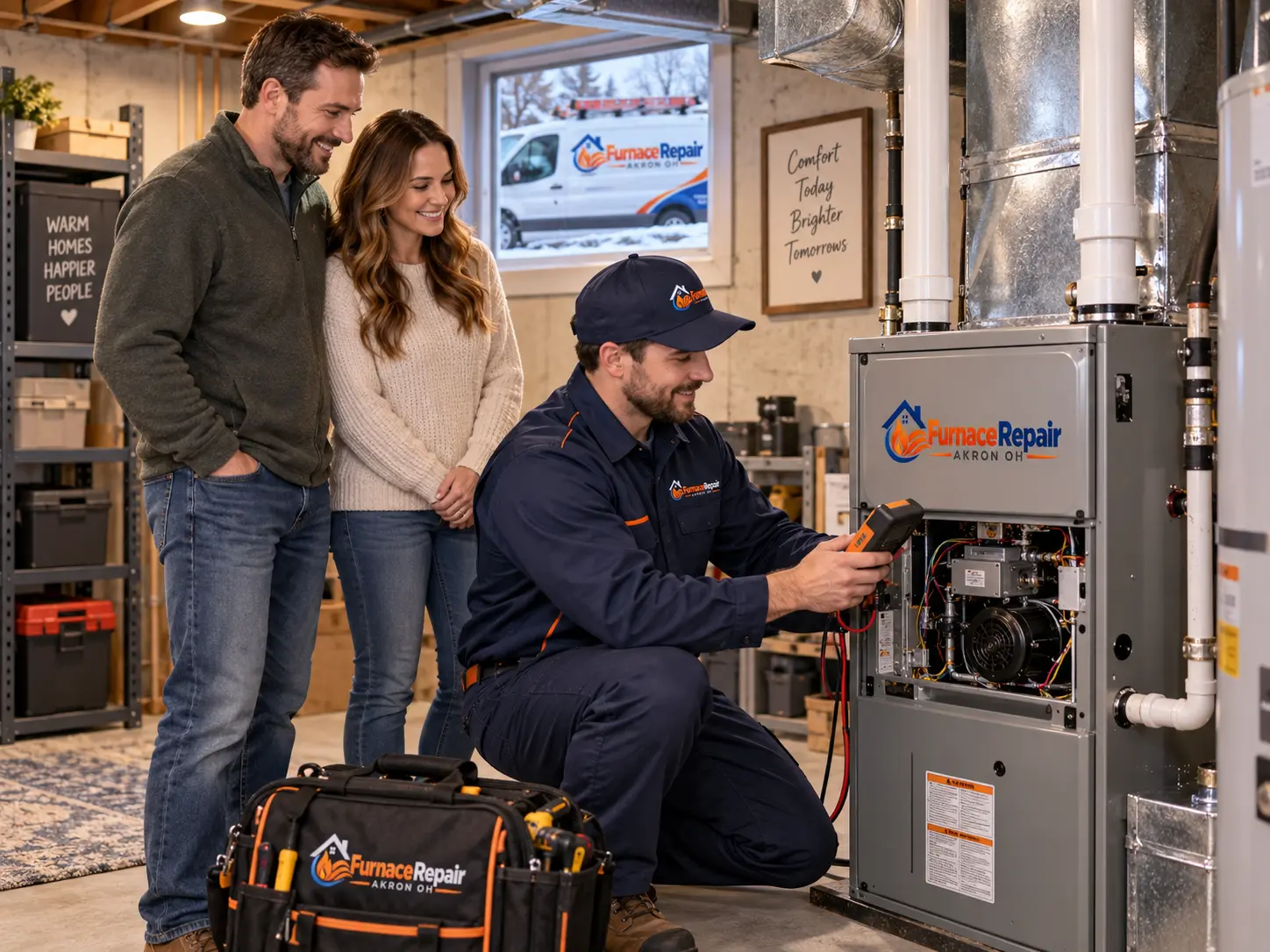
Furnace repair starts with matching a symptom to a system: heating call, ignition, combustion, airflow or controls. A technician confirms the thermostat is calling for heat, watches the startup sequence, reads any control-board fault codes, tests the suspect component, then replaces or corrects only what tests bad. Common causes of no-heat problems include the thermostat, filter and airflow, ignition and flame sensing, the blower and its capacitor, or a safety limit that shut the furnace down for a reason.
How a furnace repair visit is structured
Good furnace repair is mostly good sequencing. A gas furnace runs a fixed startup order, and each step depends on the one before it. Watching that order tells a technician where the sequence breaks.
The visit generally moves from the simplest, cheapest possibilities to the deepest ones, so you are not paying to explore a control board when the real problem is a clogged filter.
- Symptom interview: what the furnace does, when it started, whether it repeats.
- Thermostat check: is a heating call actually reaching the furnace?
- Filter and airflow check: restricted return air causes overheating and lockouts.
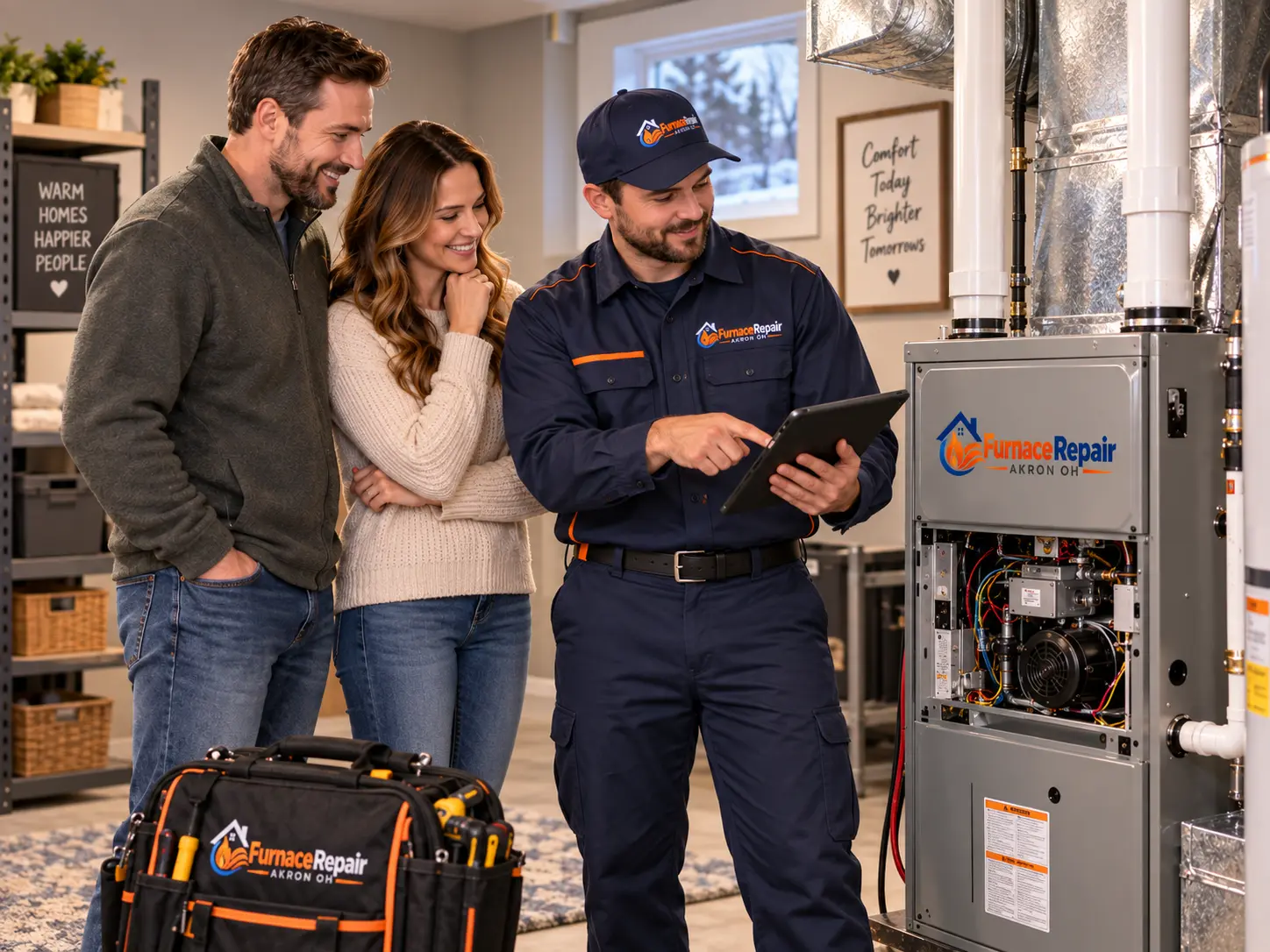
- Startup observation: inducer, pressure switch, ignitor, gas valve, flame sense, blower.
- Fault code retrieval from the control board's diagnostic light or display.
- Component testing with meters rather than parts-swapping guesses.
- Explanation of findings and options before work continues.
Parts that commonly cause residential furnace problems
Furnaces fail in patterns. Knowing the usual suspects helps you understand a diagnosis instead of taking it on faith.
| Component | What it does | Typical symptom when it fails |
|---|---|---|
| Thermostat | Calls for heat | Furnace never starts, or runs at odd times |
| Air filter | Protects blower and heat exchanger | Weak airflow, overheating, short cycling |
| Ignitor | Lights the burners | Inducer runs, burners never light |
| Flame sensor | Proves flame is present | Burners light, then shut off after a few seconds |
| Pressure switch | Confirms safe venting | Furnace stops before ignition, often with a fault code |
| Limit switch | Shuts down on overheat | Repeated shutdowns, usually with an airflow cause |
| Blower motor / capacitor | Moves heated air | No air, weak air, or humming without spin |
| Control board | Sequences everything | Erratic operation, no response, stored fault codes |
| Gas valve | Meters fuel | No ignition despite a working ignitor |
What you can safely check before calling
A few checks are genuinely safe for homeowners and occasionally solve the problem outright.
- Confirm the thermostat is set to Heat and the setpoint is above room temperature.
- Replace thermostat batteries if the display is blank or faded.
- Check the furnace breaker in the electrical panel.
- Check the furnace service switch, which looks like a light switch near the unit.
- Make sure supply and return vents are open and not blocked by furniture or rugs.
- Inspect an accessible filter and replace it following the manufacturer's guidance.
What to leave to a technician
Furnace repair involves gas, combustion byproducts and line-voltage electricity. Some work is not a homeowner task at any skill level.
- Never bypass, jumper or defeat limit switches, pressure switches or interlocks.
- Never adjust or manipulate the gas valve or gas piping.
- Never disassemble burners or open a sealed combustion compartment.
- Never attempt heat exchanger or venting repairs or modifications.
- If you smell a strong gas odor, leave the home and contact the gas utility or emergency services from a safe location.
- If a carbon monoxide alarm sounds, follow the alarm manufacturer's emergency guidance, leave the area if directed, and contact emergency professionals.
Repair, or start comparing replacement?
Repair is usually reasonable on a furnace that has been dependable and is not near the end of its expected service life. The picture changes when a system is old, has needed several repairs recently, and has comfort problems that repairs never quite fix.
Rather than a single rule of thumb, weigh age, repair history, the current estimate, a replacement estimate, efficiency and how well the home actually heats.
Furnace repair guides by symptom
Each guide below covers one problem in depth, including likely causes, safe checks and when diagnosis makes sense.
Related furnace guides
- Why your furnace is blowing cold air
- Furnace won't turn on
- Furnace short cycling causes
- Furnace ignition problems
- Flame sensor problems
- Blower motor problems
- Furnace thermostat problems
- Furnace making noise
- Uneven heating in your home
- Furnace repair cost guide
- Furnace repair vs replacement calculator
- Furnace maintenance in Akron
Frequently asked questions
- How long does a furnace repair visit take?
- Diagnosis can be the shortest part. Straightforward repairs can often be finished in the same visit, while parts that are not commonly carried may require a second trip.
- Should I keep resetting a furnace that shuts itself off?
- Repeated resets are not a fix. A furnace that locks out is reacting to a real condition such as restricted airflow, a flame-sensing problem or a venting issue, and repeated resets can hide that condition.
- Do I need to be home during the repair?
- Yes, an adult should be present for access, to describe the symptom and to approve any work after diagnosis.
- What information helps most when I call?
- Your ZIP code, the furnace's behavior, when the problem started, whether it repeats, and any code the furnace's diagnostic light is flashing.
Talk through your furnace problem
Describe what your furnace is doing and we can go over next steps for your home.
Call now FOR FREE QUOTE and for service availability.
Please have your 5-digit ZIP code ready.
Request Service
Send your furnace details and we will follow up about next steps and current service availability for your ZIP code.